Massage Pressure and Speaking Up During a Treatment
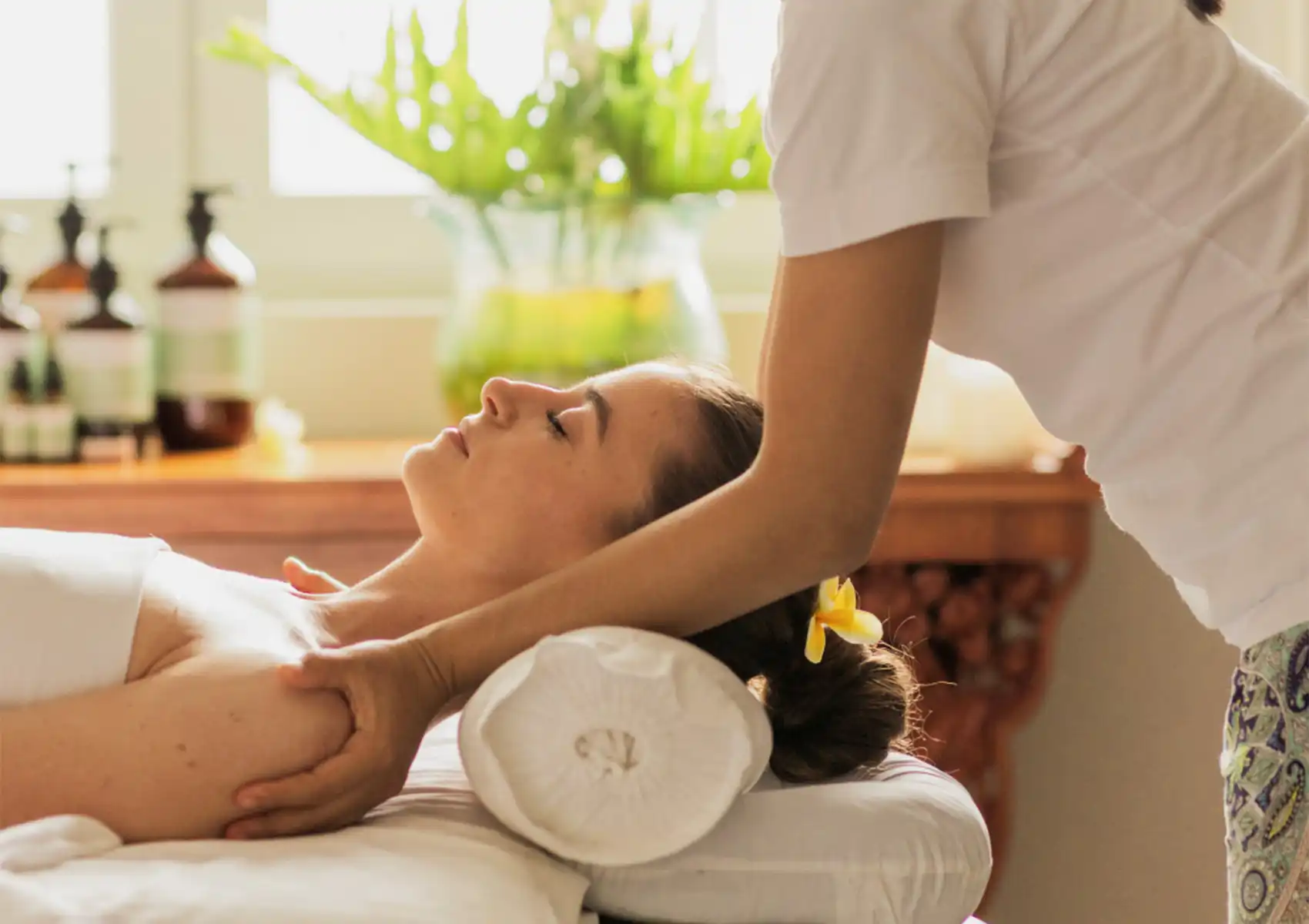
Massage pressure should feel right for you. Some guests prefer light, flowing movements, while others enjoy firmer work. The important thing is being able to tell your therapist what feels comfortable.
You do not need to wait until the treatment is over to say something. A simple “a little lighter, please” or “firmer here” gives your therapist useful information and helps shape the treatment around you.
Deep Pressure Massage and the Idea That More Is Better
Somewhere along the way, firm became a compliment and gentle became a disappointment. Guests sometimes apologise for wanting lighter work, as though less pressure means they are getting less from their treatment.
It does not work that way. Pressure that feels excessive can cause the muscles to tense and can make the treatment uncomfortable rather than relaxing. A deep-pressure massage can be appropriate for guests who enjoy firmer work, but it is not automatically the better choice.
Massage can be beneficial across a range of techniques and pressure levels. The National Center for Complementary and Integrative Health also notes that research has examined massage across different conditions and approaches rather than establishing one ideal intensity for everyone.
Setting Massage Pressure Before the Treatment Begins
The conversation before you lie down is short, but it gives your therapist useful information from the start. Say whether you generally prefer light, medium or firm pressure. Mention anything specific, such as a shoulder that has been uncomfortable since a long flight, a lower back that feels stiff after riding a scooter, or an old injury that should be avoided.
If you are not sure what you prefer, say that too. Your therapist can begin with moderate pressure and adjust according to how your body responds. Starting in the middle gives them room to move in either direction.
Telling Your Therapist What You Need
Once the treatment is underway, you do not need a full explanation. Telling your therapist what you need can be as simple as “lighter”, “firmer” or “a little less there”. Naming the area can help too: “left shoulder, please” or “a little softer here”.
You will not disturb the calm of the treatment room by speaking. A few seconds of conversation can make the rest of the treatment much more comfortable.
You can also speak up at any point. Pressure that felt right during the first ten minutes may feel different later, particularly when your therapist moves to another part of the body.
Our therapists work in English and Indonesian every day. If English is not your first language, a simple hand gesture can also help communicate whether you would like more or less pressure. The goal is understanding, not perfect vocabulary.
Areas Where Pressure Naturally Changes
Pressure does not need to remain constant throughout the body. Some areas generally call for a gentler touch, particularly around the neck, abdomen and areas close to bone. Larger muscle groups, such as the back and legs, can often tolerate firmer pressure.
If the pressure across your shoulders felt right but the neck feels too firm, that is not something you need to endure quietly. Tell your therapist so the technique can be adjusted.
Balinese massage commonly combines long, flowing strokes with kneading and sustained thumb or palm pressure. That can feel different if you are used to a flowing Swedish style. Unfamiliarity is fine. Pain is not something you need to accept as part of a massage.
Soreness in the Day That Follows
Mild tenderness can occur after a firmer massage, particularly if your body is not accustomed to that level of pressure. It should not be severe or persistent.
Sharp or significant pain during the treatment is different. If something hurts, tell your therapist immediately so the pressure or technique can be adjusted. You do not need to wait for the treatment to finish.
Getting massage pressure right is a conversation, not a guess. It is one of the simplest ways to shape the treatment around what feels comfortable for you.
A good Ubud wellness spa should make it easy to provide that feedback, because a comfortable massage experience depends as much on communication as on technique. Guests looking for the best spa in Ubud often want therapists who listen, adjust and pay attention to the details of the treatment. That is the standard we aim for at Akoya Spa.
Akoya Spa is ready when you are. To reserve your treatment, please email spa@viceroybali.com.