Neck and Shoulders Tension from Screens and Phones
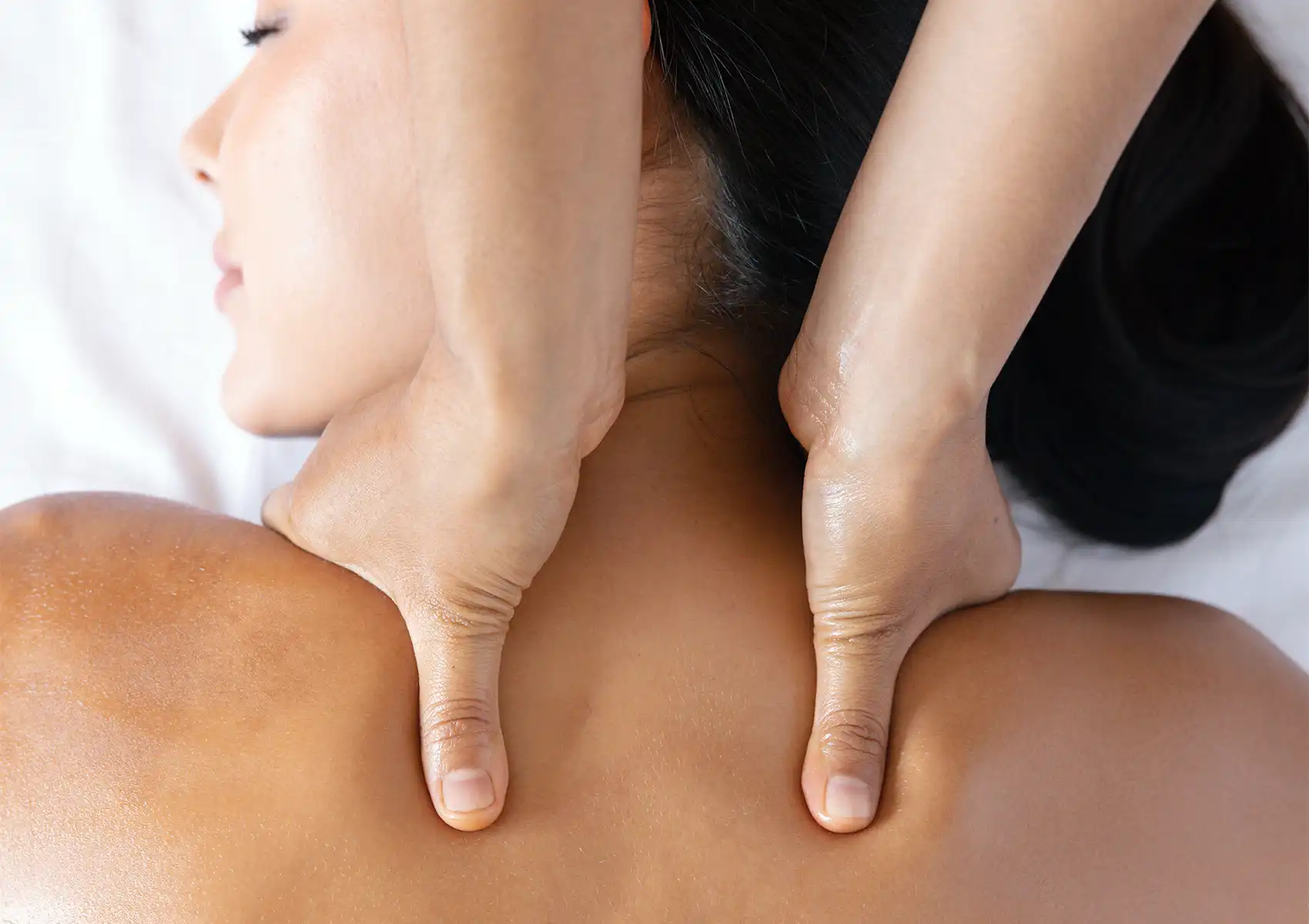
You close the laptop at six, roll your shoulders, and something across the top of them does not roll with you. Neck and shoulder tension of this kind is rarely caused by one dramatic movement. More often, it builds quietly through hours of staying in the same position.
Neck and Shoulder Tension and the Weight of Your Head
An adult head weighs roughly five kilograms. When it is balanced comfortably above the shoulders, the neck and upper back share the work of supporting it. Tilt the head forward to look down at a screen, and the muscles around the neck and shoulders have to work harder to maintain that position.
The issue is not one particular posture. It is how long you stay there without changing position. Holding the head and shoulders in one position for hours can leave the surrounding muscles feeling tight and tired, which is why the discomfort may become more noticeable towards the end of the day.
The tension often settles across the upper shoulders, around the base of the neck and between the shoulder blades rather than in one clearly defined spot.
Tech Neck and the Angle of the Screen
Phones encourage a different position from laptops, particularly when you are reading in bed or scrolling at a café table. The head drops towards the screen, and it is easy to stay there for much longer than intended.
Tech neck is less about one particular angle than about prolonged screen use and limited movement. Raising your phone closer to eye level can reduce the tilt of your head, while taking regular breaks gives your neck and shoulders a chance to move.
The same principle applies to laptops. A screen that is too low can encourage you to lean forward, particularly when you are working for several hours.
Desk Posture Without a Desk
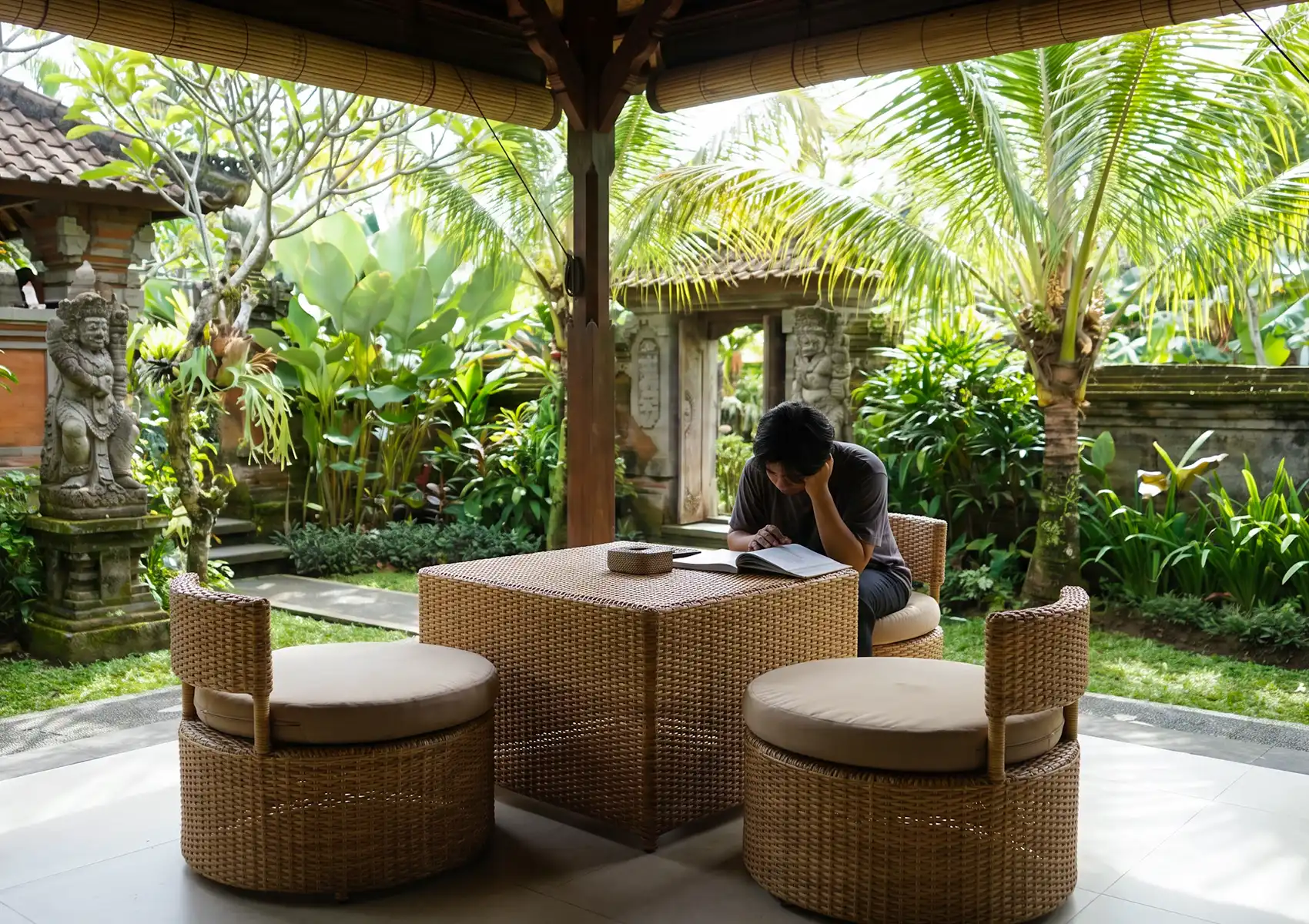
Here is the part that catches out anyone working remotely in Bali. Very few of the places people work here are actually designed as workstations.
A rattan chair at a warung, a bar stool at a café, a low table in a villa, a lounger by the pool or a bed can all put the screen below a comfortable viewing height. The shoulders and neck then spend hours adapting to the position.
Good desk posture is useful, but it assumes you have a desk to begin with. If you are working from temporary spaces, make the setup work for you instead.
Raising the laptop on a stack of books and using a separate keyboard can bring the screen closer to eye level without forcing you to raise your shoulders. Even a small adjustment can make a long working session more comfortable.
Laptop Shoulder Pain and Easing It Through the Day
Laptop shoulder pain can develop when the shoulders stay elevated or the arms remain unsupported for long periods. It can also be part of the general tension that comes from staying in one position while concentrating on a screen.
Rather than trying to hold a perfect posture all day, change position regularly. Stand up, walk around, let your arms rest and move your neck and shoulders gently before returning to the screen.
If you work remotely in Bali, this matters even more when your workday is spread between cafés, villas and other temporary spaces. The best position is not necessarily one you hold perfectly. It is one you can change frequently.
Riding can add another layer of tension. Holding the handlebars and bracing through your shoulders for repeated scooter journeys can leave the upper body feeling tight on top of an already screen-heavy day.
Most everyday tension improves with movement, rest and time. If neck pain travels down an arm or comes with numbness, pins and needles or worsening weakness.
Treatments That Reach the Right Places

A 30-minute Back and Shoulder Massage is a practical option when the main problem is accumulated tension around the shoulders, upper back and neck. It is also short enough to fit around a working day.
A 60- or 90-minute Balinese massage gives you more time if the tension has been building across several areas. Tell your therapist at the beginning that your neck, shoulders and upper back need attention, and mention your preferred pressure. The neck and shoulder area may require a different approach from the larger muscles of the back and legs.
The overlooked option is a hair creambath. Alongside the hair treatment itself, the experience includes a scalp and head massage, which can feel particularly relaxing after a day spent concentrating on a screen. It is an easy option for guests who want to switch off without booking a full-body massage.
Neck and shoulder tension is often a sign that your body has been in one position for too long. Changing your screen setup, moving throughout the day and taking proper breaks all matter. Massage can complement those habits by providing relaxation and short-term relief from muscular tension. The National Center for Complementary and Integrative Health notes that massage may provide benefits for some types of pain, although it is not a solution for every cause of neck discomfort.
A good Ubud wellness spa should ask where you have been feeling the tension and how you want the treatment to feel before deciding where to begin. Guests looking for the best spa in Ubud tend to notice that kind of attention.
Akoya Spa is ready when you are. To reserve your treatment, please email spa@viceroybali.com.